Mostrar mensagens com a etiqueta sultanas. Mostrar todas as mensagens

segunda-feira, 10 de fevereiro de 2014

Almoço paradisiaco | Paradisiac lunch


(scroll down for English)

Com a tempestade que assola a costa, dá vontade de fugir para um local paradisiaco, de sol dourado e vegetação luxuriante. Enquanto isso não acontece, há que trabalhar um pouco a magia dos ingredientes e esperar que o cérebro viaje virtualmente até ao destino de eleição. O sol no formato de uma batido de fruta e a vegetação luxuriante como orla de praias douradas numa fatia de pão com alecrim. Não acreditam em tele-transporte culinário? Então experimentem por vocês próprios! :)


Batido de sol

1 banana madura
4 tangerinas
1 c. chá de polén de abelhas

Descascar a fruta e colocar no liquidificador, juntamente com o pólen. Bater até obter um batido espesso e homogéneo.

Pão de azeite, sultanas e alecrim
(adaptado de 200 Receitas de Pão)

325ml água
100ml azeite
2 c.chá sal grosso
2 c.chá leite em pó
2 c.chá sementes de funcho ligeiramente esmagadas
1 c. sopa alecrim picado
600g farinha T65
1 c.sopa açúcar amarelo
2 c.chá fermento bio seco
100g sultanas

Colocar todos os ingredientes na cuba da MFP seguindo as instruções do fabricante. Escolher o programa Básico para um pão de 900g. Findo o tempo, retirar da cuba e deixar arrefecer sobre uma grade. Servir com queijo Gouda fatiado, fiambre de frango e mostarda Savora.


With the storm hitting the coast we feel like running away to a paradisiac place where the sun is golden and the vegetation is luxurious. While that's not going to happen, we better work the ingredients magic and wait for the brain to virtually travel to the desired destiny. The sun comes in a smoothie and the vegetation borderline the golden sandy beaches comes in slices of rosemary bread. You don't believe in culinary tele-transport? They check it for yourselves! :)


Sunny smoothie

1 banana
4 tangerines
1 tsp bee polen

Peel the fruit and blitz in the blender, together with the polen, until you have a smooth mix.

Olive oil, sultanas and rosemary bread
(adapted from 200 Recipes - Bread)

325ml water
100ml evoo
2 tsp sea salt
2 tsp powder milk
2 tsp fennel seeds slighty crushed
1 tbsp rosemary 
600g strong bread flour
1 tbsp brown sugar
2 tsp active dry yeast
100g sultanas

Place all the ingredientes in the bread machine accordingly to the manufacturer's instructions. Choose the Basic Program for a 900g bread. At the end of the program, remove the bread from the machine and leave to cool in a wire-rack. Serve with sliced Gouda cheese, chicken ham and Savora mustard.


domingo, 14 de abril de 2013

Pão integral de espelta e aveia com sultanas e nozes | Spelt and oatmeal whole bread with sultanas and walnuts


(scroll down for English)

Uma daquelas tardes. Em que o sol espreita por entre as nuvens. Por vezes sorri em todo o seu esplendor. Por vezes esconde-se sorrateiro atrás de uma nuvem de algodão. Dou por mim a pensar na simplicidade das coisas. Um chá quente. Sempre. Em qualquer altura do ano. É algo que me deixa feliz. Um pão. Misturas de farinhas. Combinação de vários ingredientes. Doce ou salgado. A primeira fatia que se corta e revela que tudo correu bem. É algo que me deixa feliz. Um vaso de flores. Cores e aromas delicados. A sua evolução diária. É algo que me deixa feliz. 
Pão integral de espelta e aveia com sultanas e nozes
(adaptado de Simple white bread em "How to make bread" de Emmanuel Hadjiandreou )

200g de farinha T65
200g de farinha integral T150
100g de farinha integral de espelta
100g de farinha integral de aveia
12g de sal
4g de fermento activo seco
420g de água morna
80g de nozes
80g de sultanas

Numa taça pequena misturar a farinha com o sal e reservar (esta é a mistura seca). Numa outra taça (um pouco maior) pesar o fermento e adicionar-lhe a água, mexendo até o fermento estar totalmente dissolvido (esta é a mistura líquida). Adicionar a mistura seca à mistura líquida, misturando com uma colher de pau e depois com as mãos até obter uma massa. Com um salazar, limpar as paredes da taça. Tapar com a taça da mistura seca e reservar por 10 mins.
Findo esse tempo, a massa está pronta a ser trabalhada. Mantendo-a na taça e puxar uma porção de massa e pressioná-la para o meio. Virar ligeiramente a taça e repetir o processo com outra porção de massa. Repetir mais 8 vezes. Este processo deverá demorar 10s e a massa deve começar a resistir. Cobrir novamente com a taça pequena e reservar por mais 10 mins. Juntar as passas e as sultanas. Repetir os 10s de amassar e esperar 10 mins mais 2 vezes. No final da 3ª fase de amassar, a massa deverá estar macia. Amassar a massa uma 4ª vez, sendo que a massa deve estar uma bola macia. Cobrir novamente com a taça pequena e deixar levedar durante 1h.
Quando a massa tiver dobrado de volume, socar gentilmente para libertar o ar. Colocar a massa numa superfície ligeiramente enfarinhada e puxar um dos lados para o centro. Repetir com o lado oposto de forma a que a massa se vá alongado até ter o tamanho da forma. Colocar na forma, polvilhar com um pouco de farinha, fazer os cortes com uma faca afiada e cobrir com uma taça ou com um saco de plástico (insuflado) e deixar levedar por 30-45mins até ter dobrado de volume.
Quando faltarem 20 mins para a massa terminar de levedar, ligar o forno a 240º C no modo ventoinha e colocar um tabuleiro no fundo. Colocar o pão no forno, deitar um copo (cerca de 500ml) água no tabuleiro e reduzir a temperatura para 200º C durante 35mins. Findo esse tempo, retirar o pão do forno, bater no seu fundo e se o som for oco o pão está cozido. Caso contrário, retornar ao forno por mais uns mins. Deixar o pão arrefecer sobre uma rede. Esta receita faz um pão de 1kg.
One of those afternoons. When the sun shines through the clouds. Sometimes it smiles in all its splendour. Sometimes it hides behind a fluffy cotton cloud. I find myself thinking about the simplicity of things. A warm cup of tea. Always. At any time of the year. It's something that makes me happy. A bread. Combos of different flours. The variety of the ingredients. Sweet or savoury. The first slice that reveals all went well. It's something that makes me happy. A pot with flowers. Delicate colours and scents. Its daily evolution. It's something that makes me happy.


Spelt and oatmeal whole bread with sultanas and walnuts
(adapted from Simple white bread in "How to make bread" by Emmanuel Hadjiandreou )

200g strong bread flour
200g whole wheat flour
100g whole spelt flour
100g whole oatmeal flour
12g salt
4g active dry yeast
420g warm water
80g sultanas
80g walnuts

In one (smaller) bowl mix the flour and salt (dry mixture). In another (larger) bowl weigh out the yeast, add the water and mix until the yeast is dissolved (wet mixture). Add the dry misture to the wet mixture and mix them together with a wodden spoon until they come together to form a dough. Cover with the smaller bowl and let stand for 10mins.
Afterwards, knead gently by pulling a portion of dough up from the side and by pressing it into the middle. Turn the bowl slighty and repeat the process with another portion of dough. Repeat another 8 times (the whole thing should take about 10sec) and the dough should start to resist. Cover again and let stand for 10mins. Add the sultanas and walnuts. Repeat the 10sec kneading process 2 times more. At the end of the 3rd kneading the dough should be beautifully smooth. Repeat the 10sec kneading one 4th time, cover with the bowl and let rise for 1h.
When the dough has doubled in volume, punch it down with your fist to release the air.
Remove the ball of dough from the bowl, place on a lightly floured work surface and fold onde edge over into the midle. Fold the oposite edge over to the midle and keep doing it until the loaf has a sausage shape the same size as the tin. Turn the loaf over and place in the prepared baking tin. Dust with flour, make some incision in the dough with a sharp knife, cover with a bowl and let rise for 30 to 45mins.
About 20mins before baking, preheat the oven to 240º C with a roasting pan placed at the bottom. When the dough has finished rising, place it in the oven, pour a glass of water (circa 500ml) onto the hot roasting pan and lower the temperature to 200º C. Bake the bread for about 35mins or until golden brown. To check if the bread is baked tip it upside down and tap the bottom - if it sounds hollow it's ready. If not, return to the oven for a few more mins. Let the bread cool in a wire rack before slicing.

domingo, 27 de janeiro de 2013

Pão de nozes pecan e sultanas

Hoje é Domingo. E com o tempo invernoso que está lá fora sabe bem ficar em casa, a ouvir a chuva reclamar da vida enquanto os pingos se esborracham em toda e qualquer superfície. Por ser Domingo, fazem alguns dos preparativos que facilitam a vida durante a semana. Os iogurtes já estão na iogurteira e mais logo a tarde vai ser passada com um bom filme ou livro, um chá bem quente e aromático e com os movimentos relaxantes que nos vão dar a fornada de pães para esta semana.
Pão de nozes pecan e sultanas
(adaptado de "How to make bread" de Emmanuel Hadjiandreou)

70g de nozes pecan, picadas
70g de sultanas
400g de farinha T65
100g de farinha integral T150
10g de sal
4g de fermento activo seco
360g de água morna

Numa taça pequena misturar a farinha com o sal e reservar (esta é a mistura seca). Numa outra taça (um pouco maior) pesar o fermento e adicionar-lhe a água, mexendo até o fermento estar totalmente dissolvido (esta é a mistura líquida). Adicionar a mistura seca à mistura líquida, misturando com uma colher de pau e depois com as mãos até obter uma massa. Com um salazar, limpar as paredes da taça. Tapar com a taça da mistura seca e reservar por 10 mins.
Findo esse tempo, a massa está pronta a ser trabalhada. Mantendo-a na taça, adicionar as pecans e sultanas e puxar uma porção de massa e pressioná-la para o meio. Virar ligeiramente a taça e repetir o processo com outra porção de massa. Repetir mais 8 vezes. Este processo deverá demorar 10s e a massa deve começar a resistir. Cobrir novamente com a taça pequena e reservar por mais 10 mins. Repetir os 10s de amassar e esperar 10 mins mais 2 vezes. No final da 3ª fase de amassar, a massa deverá estar macia. Amassar a massa uma 4ª vez, sendo que a massa deve estar uma bola macia. Cobrir novamente com a taça pequena e deixar levedar durante 1h.
Quando a massa tiver dobrado de volume, socar gentilmente para libertar o ar. Colocar a massa numa superfície ligeiramente enfarinhada e puxar um dos lados para o centro. Repetir com o lado oposto de forma a que a massa se vá alongado até ter o tamanho da forma. Colocar na forma, polvilhar com um pouco de farinha, fazer os cortes com uma faca afiada e cobrir com uma taça ou com um saco de plástico (insuflado) e deixar levedar por 30-45mins até ter dobrado de volume.
Quando faltarem 20 mins para a massa terminar de levedar, ligar o forno a 240º C no modo ventoinha e colocar um tabuleiro no fundo. Colocar o pão no forno, deitar um copo (cerca de 500ml) água no tabuleiro e reduzir a temperatura para 200º C durante 35mins. Findo esse tempo, retirar o pão do forno, bater no seu fundo e se o som for oco o pão está cozido. Caso contrário, retornar ao forno por mais uns mins. Deixar o pão arrefecer sobre uma rede. Esta receita faz um pão de 1kg.
Today it's Sunday. And with the wintery weather outside it's really nice to stay at home, listening the rain complaining about life while her drops flatten on each and every surface. Because it's Sunday, some tasks are made in advance, in order to make our life easy during the week. The yoghurts are already incubating inside the yoghurt machine and later on the afternoon will be spent in the company of a good film or book, a warm and aromatic tea and with the relaxing moves that will shape the bread loaves for this week.
Pecan raisin bread
(adapted from "How to make bread" by Emmanuel Hadjiandreou)

70g pecans, chopped
70g sultanas
400g strong bread flour
100g whole wheat flour
10g salt
4g active dry yeast
360g warm water

In one (smaller) bowl mix the flour and salt (dry mixture). In another (larger) bowl weigh out the yeast, add the water and mix until the yeast is dissolved (wet mixture). Add the dry misture to the wet mixture and mix them together with a wodden spoon until they come together to form a dough. Cover with the smaller bowl and let stand for 10mins.
Afterwards, add the pecans and sultanas and knead gently by pulling a portion of dough up from the side and by pressing it into the middle. Turn the bowl slighty and repeat the process with another portion of dough. Repeat another 8 times (the whole thing should take about 10sec) and the dough should start to resist. Cover again and let stand for 10mins. Repeat the 10sec kneading process 2 times more. At the end of the 3rd kneading the dough should be beautifully smooth. Repeat the 10scc kneading one 4th time, cover with the bowl and let rise for 1h.
When the dough has doubled in volume, punch it down with your fist to release the air.
Remove the ball of dough from the bowl, place on a lightly floured work surface and fold onde edge over into the midle. Fold the oposite edge over to the midle and keep doing it until the loaf has a sausage shape the same size as the tin. Turn the loaf over and place in the prepared baking tin. Dust with flour, make some incision in the dough with a sharp knife, cover with a bowl and let rise for 30 to 45mins.
About 20mins before baking, preheat the oven to 240º C with a roasting pan placed at the bottom. When the dough has finished rising, place it in the oven, pour a glass of water (circa 500ml) onto the hot roasting pan and lower the temperature to 200º C. Bake the bread for about 35mins or until golden brown. To check if the bread is baked tip it upside down and tap the bottom - if it sounds hollow it's ready. If not, return to the oven for a few more mins. Let the bread cool in a wire rack before slicing.

sexta-feira, 30 de dezembro de 2011

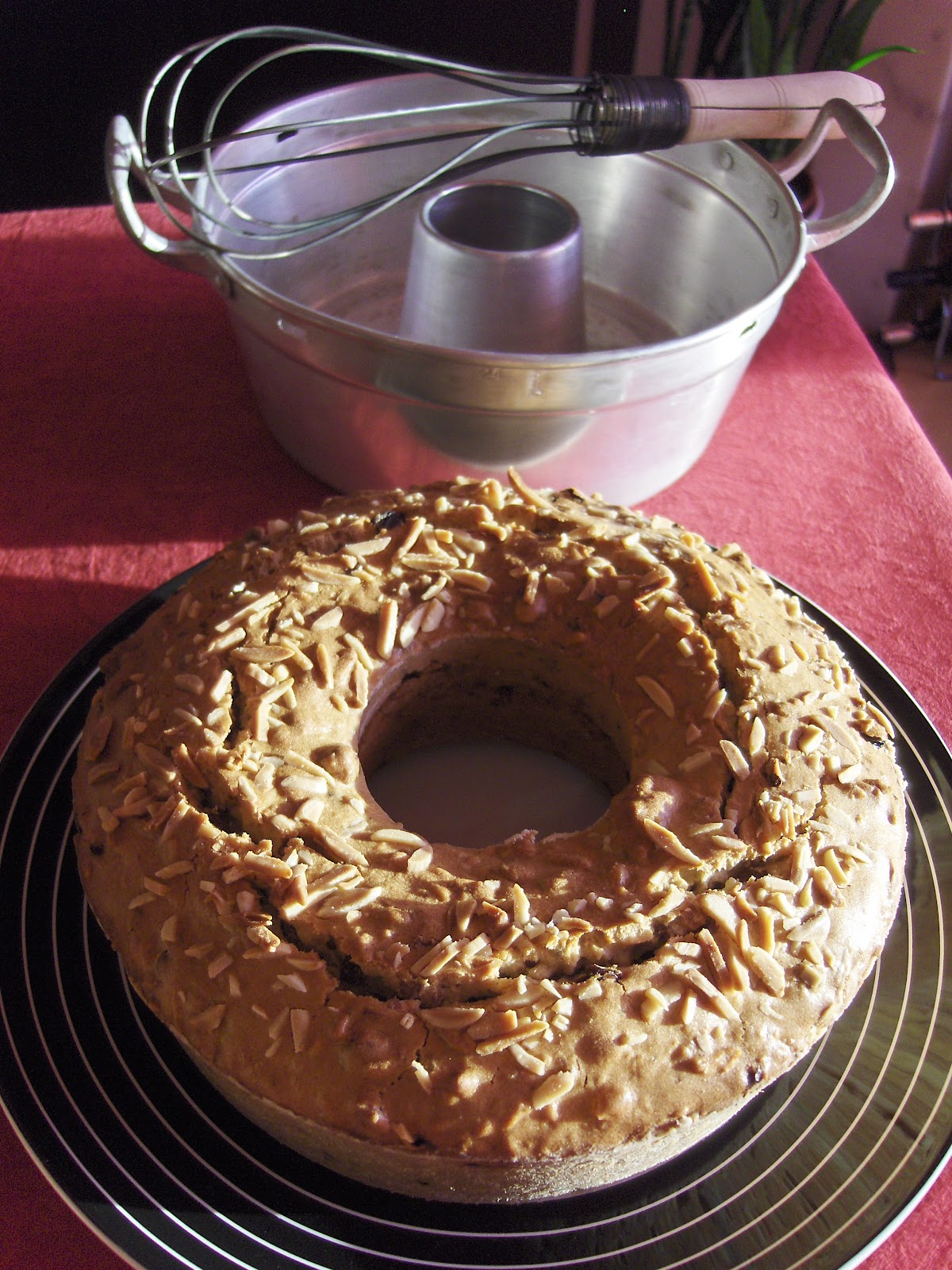
Bolo inglês de frutas secas e 3 gerações de mulheres


É tradição no nosso Natal. Na mesa das sobremesas está sempre um bolo inglês de frutas secas. Desde que me entendo por gente. O Natal sempre foi passado em casa da minha avó e portanto ela foi, desde sempre, a força motriz por detrás da logística natalícia e a cozinheira de serviço. E só ela é que sabia fazer as coisas melhor que ninguém, a maneira dela era a melhor. It runs in the family! 
Sempre gostei de (tentar) ajudar a minha avó e este bolo não era excepção, mas a verdade é que, a partir de determinada altura, a massa ficava tão espessa que só ela a conseguia bater. Quando a minha avó deixou de poder fazer este bolo, há poucos anos atrás, ele passou para a minha mãe, que levou consigo a forma e o fouet. Nunca saiu igual ao da minha avó, era mais macio e menos denso. Este ano a minha avó já não está entre nós e a minha mãe não pôde fazer o bolo. Passou para mim, juntamente com a sua forma e fouet, antigos e cheios de história. Senti o peso da responsabilidade ao fazer a minha sobremesa preferida no Natal. Dia 23, às 0h30, deu entrada no meu forno. E correu tudo bem, como sempre acontece com os milagres de Natal! À consoada, a minha mãe comeu uma fatia e disse "está muito parecido com o da minha mãe". Eu ia rebentando de felicidade :)


Bolo Inglês de Frutas secas

220g de açúcar amarelo RAR
220g de margarina
500g de farinha
1 colher-chá de fermento
6 ovos
100g de avelãs grosseiramente picadas
100g de miolo de noz grosseiramente picado
200g de amêndoa palitada (e mais para polvilhar)
100g de sultanas
2 cálices de vinho do Porto
Raspa e sumo de 1 limão

Amolecer a manteiga e batê-la com o açúcar até obter um creme. Adicionar os ovos, inteiros, um a um, batendo entre cada adição. Juntar a raspa e sumo do limão e por último a farinha peneirada com o fermento. Adicionar o vinho do Porto e as frutas (se quiser pode, no início, mergulhar as passas no vinho) e envolver na massa. Untar uma forma com margarina e farinha, deitar nela a massa, polvilhar com amêndoa palitada e levar a forno médio (coloquei a 200º C) durante cerca de 1h30mins.


A minha mãe fazia o dobro da receita e enchia esta forma de buraco e uma de bolo inglês. Também utilizava raspa e sumo de laranja, em vez do limão, e apenas um cálice de vinho do Porto.


Com esta receita, que já passou por 3 gerações de mulheres desta família, participo no Passatempo "Coisas doces para saborear até ao dia de Reis" divulgado pelo Cinco Quartos de Laranja com o patrocínio da RAR.


Desejamos a todos os leitores do nosso blogue um Feliz 2012 com a promessa de voltarmos para o ano, com mais receitas, histórias, fotos e bons momentos para partilhar!